
Loading...
Serving Midlothian, TX and surrounding areas. (469) 856-7199
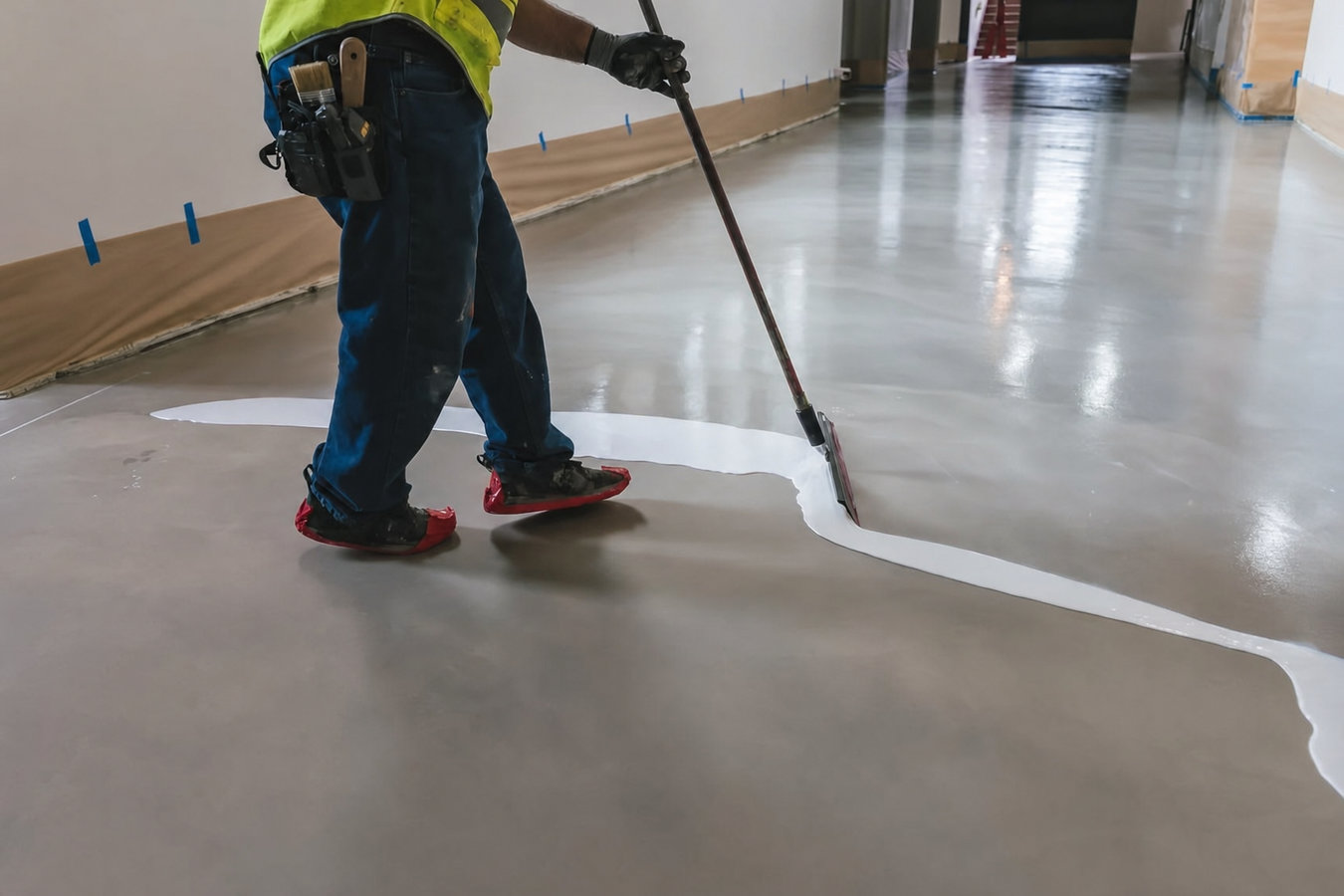
Dips, low spots, and uneven concrete cause flooring failures and tripping hazards. Self-leveling overlays fix the underlying problem so your next floor actually lasts.
Self-leveling concrete in Midlothian is a specially mixed material that flows across an existing slab and settles into a smooth, flat surface on its own - most garage and room-size projects are complete in one to two days, with the floor ready for light use within 24 hours.
It does not replace your slab - it goes on top of it, usually in a layer between one-eighth of an inch and one inch thick. Homeowners use it most often in garages, basements, laundry rooms, and kitchens where years of temperature cycling and Midlothian's expansive clay soil have caused the floor to settle unevenly. It is also the right first step before installing new tile or luxury vinyl plank, because those materials need a flat surface to sit on correctly. When the existing overlay needs to come off before you start, our concrete resurfacing and overlays service covers the full process.
A contractor who knows this work will check for moisture before starting - it is the most common cause of overlay failure, and skipping that step is how otherwise good projects come apart within a year.
A soft bounce or visible dip in a room is a sign the slab has settled unevenly over time. In Midlothian, this happens frequently in homes built on clay-heavy soil where the ground shifts through years of wet and dry cycles. A self-leveling overlay fills those low spots and restores a flat, stable surface.
Tile that cracks within a year of installation, or vinyl plank that gaps at the seams, almost always points to a slab that was not flat enough before the flooring went down. If this has already happened to you, fixing the root cause with an overlay before the next installation is the step that makes the difference.
When one room sits slightly higher or lower than the next, it creates a tripping hazard and makes the home feel uneven. This kind of height difference develops gradually in Midlothian homes as different parts of the clay-supported slab move at different rates. An overlay brings the low side up to match.
If water pools in spots on your garage floor after Midlothian's spring storms, the floor is not level. Standing water accelerates surface wear and works its way into cracks over time. Leveling those low spots solves the drainage problem and protects the slab from further damage.
We install self-leveling underlayment as a base coat for new flooring and as a standalone finished floor for garages, utility spaces, and interior rooms. For homeowners who want a finished look on top of the leveling layer, we add decorative overlays that can be colored, polished, or textured to match the style of the space. Many clients combine a self-leveling base with our concrete resurfacing and overlay service when the existing surface has both leveling issues and surface wear to address in the same project.
For pool decks with low spots and drainage problems, we also offer a specialized version of this work through our pool deck coatings and resurfacing service. Every project begins with a floor assessment and a moisture check - because no overlay, regardless of quality, holds up on a slab that is releasing moisture vapor. The American Concrete Institute publishes guidelines on floor preparation standards that inform our approach to every job.
Homeowners preparing a floor for new tile, hardwood, or luxury vinyl plank installation.
Garages, utility rooms, and basement spaces that need a smooth, durable surface without additional flooring on top.
Interior floors where you want a polished or colored finish that also corrects unevenness.
Pool surrounds with drainage problems or low spots that collect standing water.
Midlothian sits on expansive Blackland Prairie clay that shifts with every significant rain and dry spell. That movement shows up in floors as gradually worsening low spots, subtle height differences between rooms, and garage floors that collect water in places they did not used to. Homes built between the 1970s and the early 2000s are especially likely to show this pattern, because the slab has had more time to settle and the clay has gone through many more cycles of expansion and contraction. Homeowners in Cedar Hill and DeSoto face the same soil conditions and see the same types of floor problems that self-leveling overlays are designed to fix.
Moisture management is the other Midlothian-specific factor that matters here. Clay soil holds water and can push moisture vapor upward through a slab - and that vapor is the most common cause of overlay failure. Before any pour, we test the slab for moisture using a simple but reliable method, and we will tell you directly if the reading suggests we need to address moisture first. Spring and fall are the best seasons for this work in Midlothian, when temperatures are moderate and humidity is more predictable - conditions that allow the material to cure correctly without the risk of premature drying from summer heat.
We ask a few basic questions about the area, what the floor looks like now, and what you want to do with it afterward. We schedule a free on-site visit - no honest contractor quotes this work without seeing the floor. We respond within 1 business day.
We walk the floor, identify low spots and cracks, and test for moisture - especially important in Midlothian where clay soil can push vapor up through the slab. You get a written quote that breaks down exactly what is included before any work is scheduled.
Remove everything from the floor - furniture, appliances, rugs, and storage. We handle the technical prep on the day of the job: thorough cleaning, crack treatment, and applying a bonding agent so the new material adheres correctly. This step is what the durability of the finished floor depends on.
The material is mixed and poured, spreading across the floor and settling flat on its own. Most room or garage-size jobs take a few hours. The surface is walk-on ready within 24 hours. We walk the finished floor with you and explain ongoing care before we leave.
We come out, walk the floor, test for moisture, and give you a written quote with no obligation. Most self-leveling overlay projects are complete in one to two days.
(469) 856-7199We test every slab for moisture vapor before mixing a single bag of material. In Midlothian, where clay soil holds water and pushes it upward through concrete, skipping this step leads to overlays that bubble, peel, or delaminate within months. We check first and tell you what we find.
You get a written estimate that breaks down the scope, the prep process, and the total cost before we schedule the job. No price surprises after the material is already on your floor. That kind of transparency is a basic standard we hold ourselves to on every project.
Skipping the bonding agent - a primer applied to the existing slab before the pour - is one of the most common shortcuts that leads to early overlay failure. We apply it as a standard part of the process, not an upsell, because it is what keeps the new material adhered to the old slab through years of use.
We assess every Midlothian project for soil movement before recommending an overlay. A self-leveling pour over an actively shifting slab is a waste of your money. Understanding how the Blackland Prairie clay behaves here is part of how we evaluate whether the timing and approach are right for your specific floor.
These are the practical differences between a self-leveling overlay that holds for a decade and one that starts delaminating after the first Texas summer. We also recommend reviewing installation standards published by the American Society of Concrete Contractors if you want to understand what best-practice overlay installation looks like before you hire anyone.
Drainage-correcting resurfacing for pool surrounds, with slip-resistant and UV-stable finish options.
Learn MoreSurface-level restoration for driveways, patios, and garage floors that are worn but structurally sound.
Learn MoreMost self-leveling overlay projects are done in one to two days. Call or submit a request now to get your floor assessed and a written quote in hand.